Insulation Installation in Rolling Hills Estates, CA
Expert Insulation Installation for Rolling HIlls Estates, CA Homes & Businesses
Professional insulation installation in Rolling Hills Estates, CA. Attic, spray foam, crawl space & more. Free estimates. Call High Return Insulation: (310) 496-8515.
Insulation installation is the process of fitting thermal and acoustic barrier materials within walls, attics, crawl spaces, and floors to regulate indoor temperature, reduce energy consumption, and improve overall comfort. For homeowners in Rolling Hills Estates, CA, professional insulation installation is especially important given the area’s coastal Mediterranean climate, hillside construction styles, and the prevalence of custom-built ranch homes dating back to the 1950s and 1960s.
At High Return Insulation, we specialize in delivering precision insulation solutions tailored to the unique architectural demands of Rolling Hills Estates properties. From sprawling equestrian estates along Palos Verdes Drive North to hillside residences near Crest Road, our team understands the microclimatic variations and building conditions that make local insulation a specialized service. Whether you need a full attic insulation upgrade or a complete crawl space encapsulation, we bring the expertise, materials, and local knowledge to get the job done right the first time.
Understanding Insulation Installation in Rolling Hills Estates
Insulation installation involves selecting and applying the appropriate insulating materials to create a thermal envelope around your living space. This envelope slows the transfer of heat between the interior of a home and the outside environment, helping to keep homes warmer in winter and cooler during summer heat events. In Rolling Hills Estates, understanding how insulation works means recognizing the specific interplay between the Pacific Ocean’s marine layer, canyon wind patterns, and the area’s distinct topography.
Rolling Hills Estates was formally incorporated in 1957 and developed rapidly throughout the late 1950s and 1960s as part of the broader Palos Verdes Peninsula expansion. Most of the housing stock consists of single-story ranch-style homes, split-level designs, and custom builds that sit on graded hillside lots. Many of these structures were built under California Title 24 energy standards that were far less stringent than today’s requirements, meaning original insulation—if still in place—is typically R-11 or lower in walls and R-19 or lower in attics, well below the current recommended minimums of R-38 to R-60 for attic spaces in Climate Zone 8.
Read moreShow less
Modern insulation materials have evolved significantly from the fiberglass batts that were standard in mid-century construction. Today, homeowners in Rolling Hills Estates can choose from blown-in cellulose, open-cell and closed-cell spray foam, mineral wool, and rigid foam board, each with distinct R-values per inch and moisture management properties suited to different parts of the home.
Attic insulation addresses the largest source of heat gain and loss in most Palos Verdes Peninsula homes—studies show that attics can account for up to 40% of a home’s total energy loss. Crawl space insulation and encapsulation are equally critical in Rolling Hills Estates, where elevated homes on graded slopes often have exposed underfloor areas vulnerable to moisture intrusion from seasonal rains and marine fog condensation. Spray foam insulation provides superior air sealing in these challenging cavities, while blown-in insulation offers rapid, cost-effective coverage for large attic surfaces.
Why Insulation Installation Is Needed in Rolling Hills Estates, CA
The Marine Layer and Coastal Humidity
Rolling Hills Estates sits at elevations ranging from approximately 400 to over 1,200 feet above sea level on the Palos Verdes Peninsula. This elevation means that marine layer fog—which rolls in from the Pacific Ocean during late spring and summer, a phenomenon locals call “June Gloom”—regularly saturates the air with moisture. Average relative humidity in the area can reach 80–90% during morning marine layer events between May and August. When attics and crawl spaces lack adequate insulation and vapor barriers, this sustained moisture infiltration leads to condensation on cold structural surfaces, accelerating wood rot, mold growth, and pest intrusion.
Temperature Swings Between Neighborhoods
While Rolling Hills Estates has a generally mild climate, temperature variation across its neighborhoods is significant. Homes along the lower elevations near Hawthorne Boulevard and Palos Verdes Drive North experience afternoon temperatures that can reach 85–90°F during late summer heat events, such as those recorded during the September 2022 Southern California heat dome when Torrance recorded 106°F and the Palos Verdes Peninsula saw temperatures in the upper 90s. Conversely, hilltop neighborhoods near Crenshaw Boulevard and upper Crest Road can be 8–12°F cooler, but experience stronger canyon winds from Santa Ana wind events every fall and early winter.
Santa Ana Wind Events and Thermal Bypass
Santa Ana winds, which typically arrive between October and February, drive warm, dry air down from inland desert basins at speeds that have exceeded 60 mph on the Palos Verdes Peninsula. These events create dramatic pressure differentials across building envelopes. In homes with inadequate insulation and poor air sealing—especially those with vented crawl spaces and older fiberglass batt insulation in attics—Santa Ana conditions cause significant thermal bypass, allowing conditioned air to escape and hot or cold outside air to infiltrate. This directly inflates energy bills and strains HVAC systems.
Aging Housing Stock in Rolling Hills Estates
A substantial portion of Rolling Hills Estates’ residential properties—particularly in the Dapplegray neighborhood, along Crest Road, and in the original tract developments east of Palos Verdes Drive North—were constructed between 1955 and 1975. Homes of this era commonly feature uninsulated or under-insulated crawl spaces, minimal wall cavity insulation of R-11 or less, and attics with compressed or degraded fiberglass batts that may have settled to effective R-values as low as R-10 over time. Pest activity—including rodents and subterranean insects common in hillside Peninsula properties—further degrades existing insulation.
California Title 24 Compliance
California’s Title 24 Building Energy Efficiency Standards, updated most recently for the 2022 code cycle, require Climate Zone 8 homes (which includes Rolling Hills Estates) to achieve R-38 minimum in ceilings and R-13 in exterior walls for new construction and major renovations. Homeowners planning ADU additions, remodels, or roof replacements must bring insulation into compliance, making professional installation a regulatory requirement as well as a practical improvement.
Explore our crawl space encapsulation solutions for Palos Verdes Peninsula homes
Free, no-obligation estimates
Talk to High Return Insulation
Tell us what you need and we’ll take it from there.
Signs You Need Insulation Installation in Rolling Hills Estates
Energy and Comfort Indicators
- Monthly electricity bills that have increased 20% or more year-over-year without a change in usage habits
- Rooms that feel stuffy and hot during summer afternoons despite running air conditioning
- Cold floors during winter mornings, particularly in homes with crawl spaces on the Palos Verdes hillside
- HVAC system running continuously during Santa Ana wind events without maintaining set temperature
- Noticeable drafts near outlets, light switches, or along baseboards during strong winds
Structural and Moisture Warning Signs
- Visible mold or mildew in attic or crawl space areas, a common result of marine layer moisture intrusion
- Musty odors in lower-level rooms or near floor registers, indicating crawl space moisture problems
- Evidence of rodent activity in attic insulation—droppings, nesting material, or chewed batts
- Water staining on ceiling drywall beneath the attic, which may indicate condensation rather than a roof leak
Urgency Indicators
- Insulation that is more than 20–25 years old and has never been assessed or replaced
- Homes undergoing roof replacement—an ideal time to address attic insulation simultaneously
- Planned room additions or ADU construction requiring Title 24 compliance
Our process
Our Insulation Installation Process in Rolling Hills Estates
At High Return Insulation, we follow a structured, location-aware installation process designed to deliver lasting results for Rolling Hills Estates’ unique residential conditions.
- 01
Free On-Site Assessment (60–90 Minutes)
Our technician visits your property to conduct a thorough inspection of all insulation zones—attic, walls, crawl space, and garage ceiling. We document existing R-values, identify moisture intrusion points, and note any pest damage or mold presence. For hillsi
- 02
Custom Proposal and Material Selection (1–3 Days)
We prepare a detailed written proposal specifying the insulation type, target R-value, square footage, and estimated cost. We recommend materials appropriate to your specific zones—for example, closed-cell spray foam for crawl spaces subject to moisture exposu
- 03
Site Preparation (2–4 Hours on Install Day)
Before installation begins, our crew protects interior spaces with drop cloths, sets up ventilation equipment for spray foam applications, and removes any degraded or contaminated existing insulation that cannot be retained. All rodent entry points identified
- 04
Insulation Removal (If Required) (3–6 Hours)
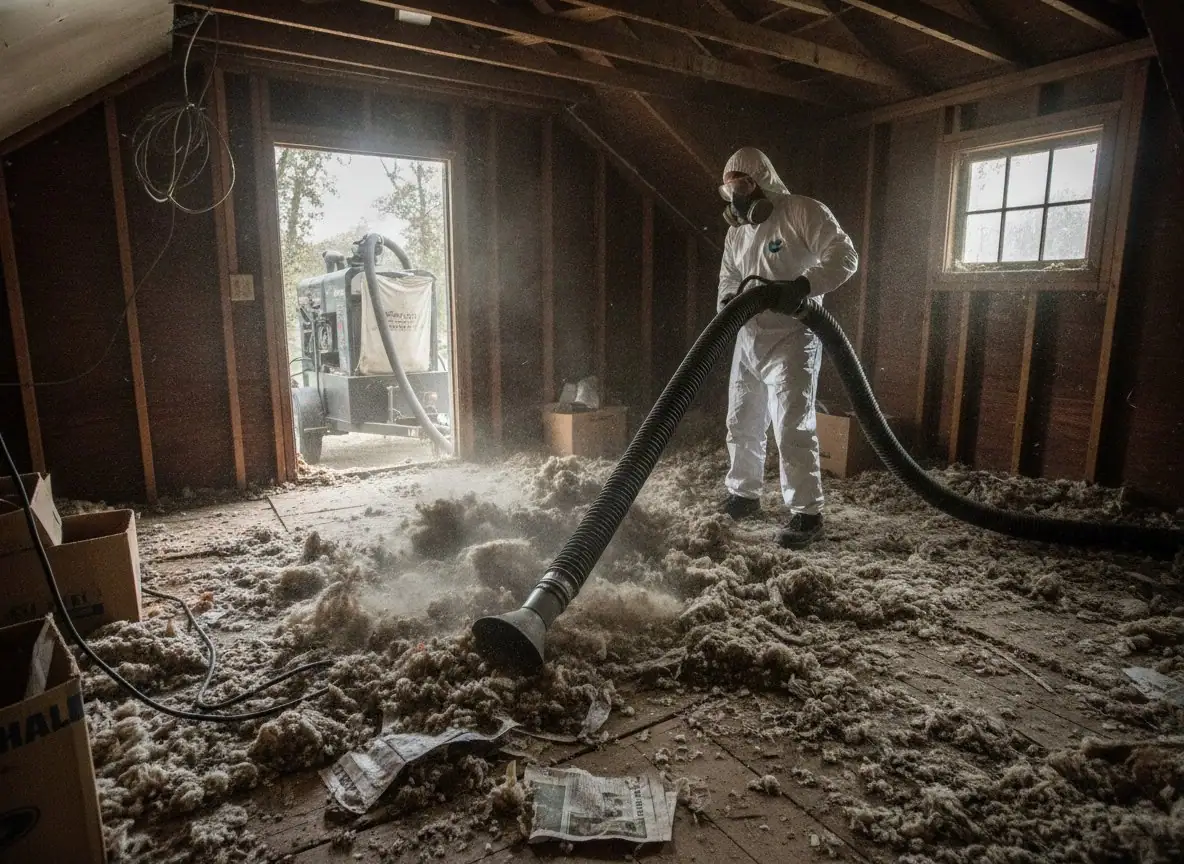
For attics with rodent-damaged or mold-contaminated insulation, we perform a complete vacuum removal using HEPA-equipped equipment. All removed material is bagged and disposed of off-site in compliance with Los Angeles County waste regulations.
- 05
Installation (4–8 Hours Depending on Scope)
Installation is performed by trained technicians following California Title 24 specifications. Blown-in insulation is applied to achieve a uniform depth corresponding to target R-values (typically 12–15 inches for R-38 to R-49 in attics). Spray foam is applied
- 06
Quality Inspection and Depth Verification (30–60 Minutes)
A secondary inspection confirms that installation meets specified R-values through depth gauge measurement and visual verification. Thermal imaging is repeated where feasible to confirm elimination of thermal bypass zones.
- 07
Clean-Up and Documentation (30 Minutes)
All work areas are cleaned, and the homeowner receives a written completion report including materials used, R-values achieved, and before-and-after documentation suitable for permit records or utility rebate applications.
Insulation Methods and Approaches We Use in Rolling Hills Estates
Blown-In Insulation
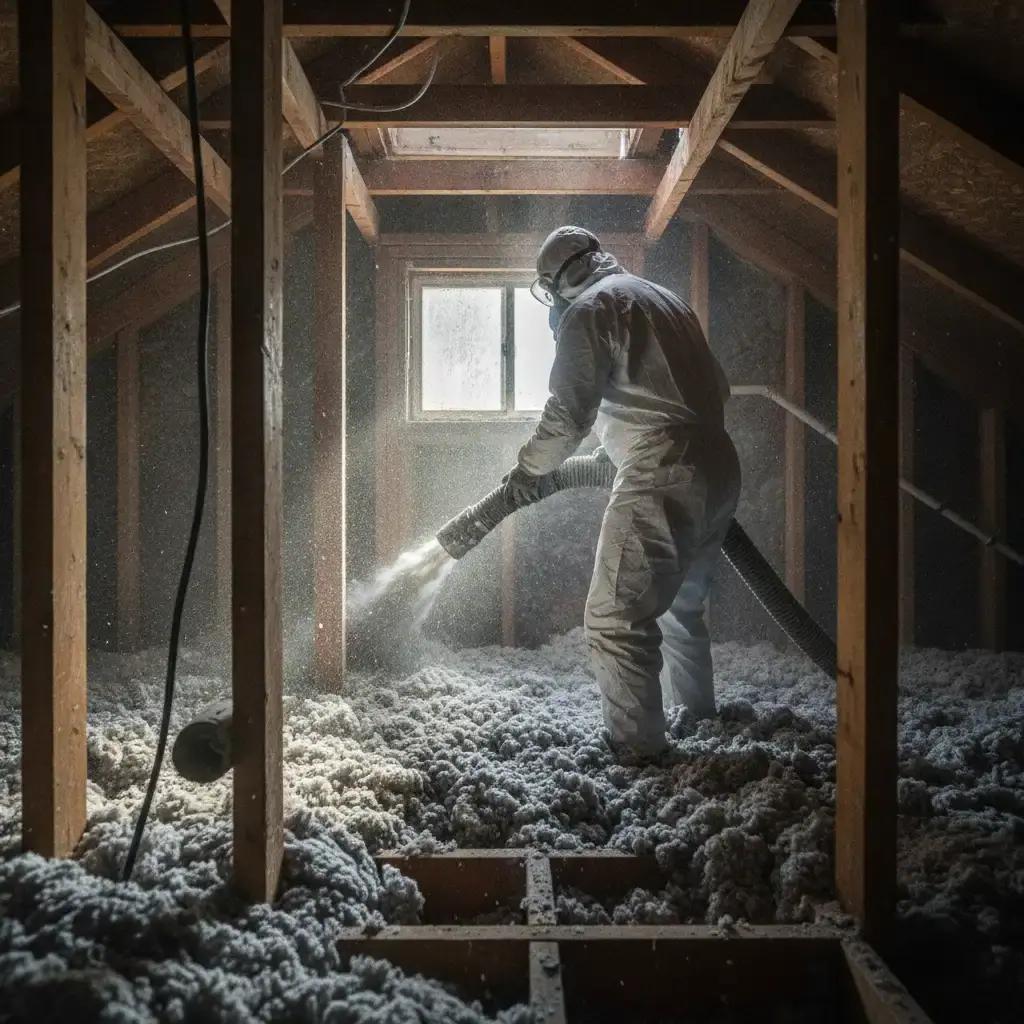
Blown-in insulation—using either fiberglass or cellulose—is the most cost-effective solution for large attic spaces, which are common in the ranch-style and split-level homes throughout Rolling Hills Estates. Cellulose blown-in achieves R-3.5 to R-3.8 per inch and is particularly well-suited for retrofitting existing homes without disturbing interior finishes. It also has natural fire-retardant properties. We use this method extensively in the Dapplegray and Eastfield neighborhoods where older attics have wide, accessible spans. Learn more about blow-in insulation
Spray Foam Insulation
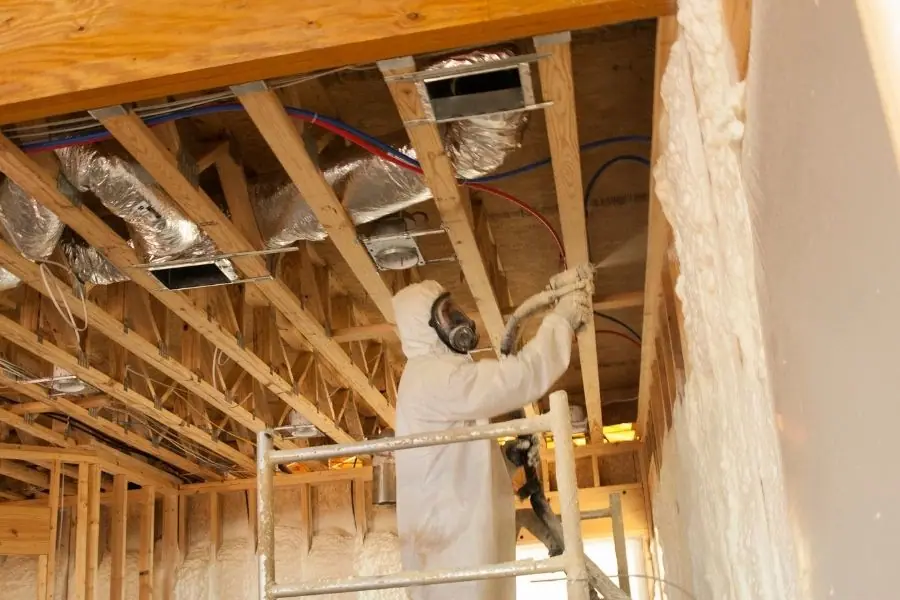
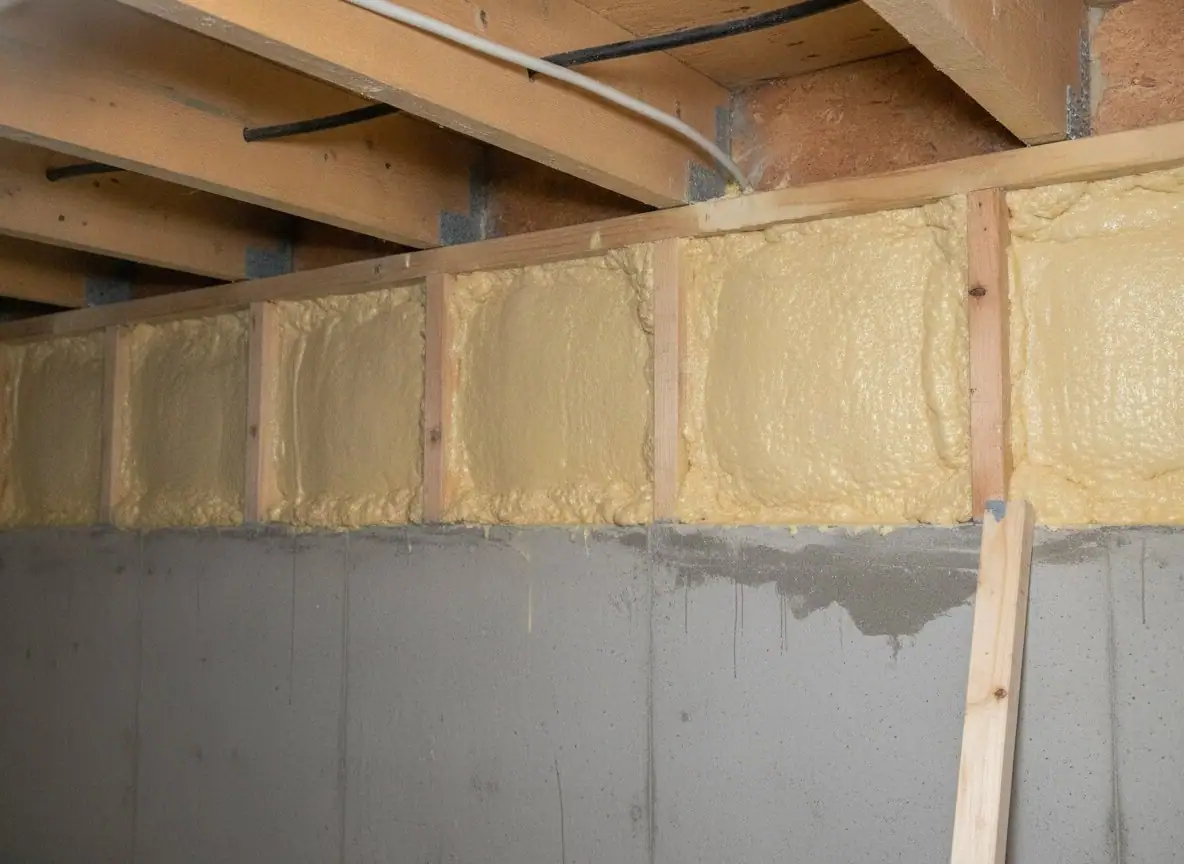
Closed-cell spray foam delivers R-6 to R-7 per inch and creates an impermeable air and moisture barrier, making it ideal for crawl spaces on hillside properties where ground moisture and marine fog condensation are persistent concerns. Open-cell spray foam is used in cathedral ceiling cavities and interior wall applications where flexibility and sound attenuation are priorities. Explore spray foam insulation options
Attic Insulation
Targeted attic insulation upgrades address the primary zone of heat gain and loss. We combine air sealing of top-plate penetrations with blown-in or batt insulation to achieve the Title 24 required R-38 minimum. For homes near Crest Road with vaulted ceilings, rigid foam board combined with spray foam provides the R-value necessary in limited-depth rafter bays. View our attic insulation service
Crawl Space Encapsulation and Insulation
Rolling Hills Estates’ many hillside homes with raised foundations benefit significantly from full crawl space encapsulation. This involves installing a 20-mil reinforced vapor barrier across the ground, insulating the perimeter walls with rigid foam or spray foam, and sealing all vents to create a conditioned or semi-conditioned crawl space. This eliminates the moisture pathway that causes floor-level cold spots and mold issues. Learn about crawl space encapsulation
Insulation Removal and Replacement
For homes where existing insulation is damaged by rodent activity, mold, or age-related compression, complete removal and replacement ensures new materials perform at rated R-values without contamination concerns. Learn about our insulation removal process
Insulation Installation Cost in Rolling Hills Estates, CA
Understanding the cost of insulation installation in Rolling Hills Estates helps homeowners budget effectively and evaluate proposals. Pricing varies based on service type, square footage, material selection, and site-specific factors common to Palos Verdes Peninsula properties.
Typical Cost Ranges
- Blown-In Attic Insulation: $1.50–$3.50 per square foot installed. A typical 1,800–2,200 sq ft Ranch home attic in Rolling Hills Estates will cost approximately $2,700–$7,700 for a complete blown-in installation to R-38.
- Spray Foam Insulation (Crawl Space): $3.00–$7.00 per square foot. A crawl space of 1,000 sq ft in a hillside home typically ranges from $3,000–$7,000 depending on foam type and access complexity.
- Crawl Space Encapsulation: $5,000–$15,000 for a complete system including vapor barrier, perimeter foam, and vent sealing, depending on crawl space size and existing conditions.
- Insulation Removal: $1.00–$2.50 per square foot for attic vacuum removal, with a full attic removal averaging $1,800–$5,500 in the Rolling Hills Estates market.
- Wall Insulation (Blow-In via Dense Pack): $2.50–$5.00 per square foot of wall area.
Read moreShow less
Rolling Hills Estates-Specific Cost Factors
Several local factors influence pricing. Hillside access for equipment staging adds $200–$500 to projects on steeper lots along Crest Road or Indian Peak Road. Crawl spaces with limited clearance (under 18 inches) increase labor costs by 15–25%. Homes requiring asbestos-containing insulation testing—common in pre-1980 Palos Verdes Peninsula construction—may require third-party abatement prior to new installation. Southern California Edison rebate programs can offset $150–$500 of attic insulation costs for qualifying upgrades.
Contact us at (310) 496-8515 for a free itemized estimate specific to your Rolling Hills Estates property.
Rolling Hills Estates Neighborhoods We Serve
Dapplegray
Dapplegray is one of Rolling Hills Estates’ most established equestrian communities, featuring large ranch-style homes built primarily between 1958 and 1972 on lots adjacent to the Dapplegray Equestrian Center. Homes here commonly have wide attics over single-story floor plans with original blown-in rock wool or degraded fiberglass insulation that has compressed to ineffective R-values. Crawl spaces in this neighborhood often show moisture intrusion from seasonal rain and horse paddock irrigation runoff.
Eastfield
Eastfield homes, concentrated along Palos Verdes Drive North and Hawthorne Boulevard’s eastern corridors, represent a mix of 1960s tract construction and 1980s–1990s custom builds. The tract-era homes frequently have minimal wall insulation and attics that were under-insulated to standards common before California’s 1978 energy code revisions. This neighborhood also sees higher afternoon temperatures due to its lower elevation exposure.
Crest Road Corridor
Properties along Crest Road occupy some of Rolling Hills Estates’ highest elevations, making them particularly exposed to Santa Ana wind events and significant diurnal temperature swings. Many of these custom homes feature complex rooflines with vaulted ceilings that require specialty insulation approaches including rigid foam and spray foam combinations to meet R-value targets in limited rafter bays.
Indian Peak and Palos Verdes Drive North Areas
These lower hillside areas include homes from the 1970s–1990s with raised foundations and accessible crawl spaces. Moisture management and crawl space encapsulation are the most common service needs here, driven by the combination of hillside drainage and marine layer humidity.
Insulation Maintenance Tips for Rolling Hills Estates Homeowners
- Inspect your attic annually for rodent activity: The Palos Verdes Peninsula’s hillside habitat is home to roof rats and other rodents that regularly infiltrate attic spaces. Check for droppings, nesting material, and chewed insulation each fall before the rainy season.
- Check crawl space vapor barriers after heavy rain events: Rolling Hills Estates averages 14–16 inches of rainfall annually, concentrated between November and March. Inspect vapor barriers after significant rain events for pooling water, tears, or displacement.
- Monitor attic insulation depth every 5–7 years: Blown-in insulation can settle over time. Use a depth ruler to verify that attic insulation remains at the installed depth, typically 12–15 inches for R-38 to R-49.
- Seal new penetrations immediately: Any new electrical, plumbing, or HVAC work that creates ceiling or wall penetrations should be air-sealed before re-covering to prevent thermal bypass.
- Keep attic vents clear: Ensure soffit and ridge vents remain unobstructed to prevent moisture buildup during marine layer events.
- Check for mold after prolonged June Gloom periods: Extended marine layer conditions in May through July can introduce enough moisture to initiate mold growth in poorly sealed attic and crawl spaces.
- Review utility bills seasonally: A sudden unexplained increase in summer cooling or winter heating costs is often an early indicator of insulation degradation or air sealing failure.
Why Choose High Return Insulation in Rolling Hills Estates
High Return Insulation is a locally focused insulation contractor serving the entire Palos Verdes Peninsula and South Bay region. Our team has direct, hands-on experience with the specific challenges presented by Rolling Hills Estates’ hillside properties, coastal humidity conditions, and mid-century housing stock. We understand that no two properties on the Peninsula are alike—from the steeply graded crawl spaces of Indian Peak Road homes to the wide attics of Dapplegray’s ranch estates—and we customize every installation to your property’s exact conditions.
We use premium materials rated for California’s coastal Climate Zone 8 conditions and install to Title 24 specifications, ensuring your home meets current energy codes and qualifies for applicable Southern California Edison and SoCalGas rebate programs. Our team provides clear, itemized written proposals before any work begins so you are never surprised by final costs.
Read moreShow less
We serve Rolling Hills Estates and all surrounding South Bay communities including Torrance, Palos Verdes Estates, Rancho Palos Verdes, Rolling Hills, Manhattan Beach, Redondo Beach, and Hermosa Beach. Call us at (310) 496-8515 or contact us online to schedule your free on-site assessment today.
Schedule your free Rolling Hills Estates insulation assessment
FAQ
Frequently Asked Questions About Insulation Installation in Rolling Hills Estates, CA
How much does insulation installation cost in Rolling Hills Estates?
Costs depend on the service type and scope. Blown-in attic insulation typically ranges from $1.50 to $3.50 per square foot, while spray foam for crawl spaces runs $3.00 to $7.00 per square foot. A complete crawl space encapsulation in a hillside Rolling Hills Estates home typically costs $5,000 to $15,000. We provide free, itemized on-site estimates at no obligation.
How long does insulation installation take for a typical Rolling Hills Estates home?
Most single-service projects—such as blown-in attic insulation for a 2,000 sq ft home—are completed in a single day (4–8 hours). Combined projects involving attic insulation and crawl space encapsulation typically take 2 full days. Homes with difficult site access on steep hillside lots may require additional time for equipment staging.
Does Rolling Hills Estates have specific insulation requirements?
Yes. Rolling Hills Estates falls within California’s Climate Zone 8 under Title 24 Building Energy Efficiency Standards. This requires R-38 minimum in ceilings and R-13 minimum in exterior walls for permitted projects. Projects involving room additions, ADUs, or roof replacements typically require insulation upgrades to meet current code. Our team is familiar with Rolling Hills Estates Building and Safety permit requirements and can provide documentation for permit applications.
Is insulation installation in Rolling Hills Estates necessary even with the mild coastal climate?
Absolutely. The mild average temperature of Rolling Hills Estates can be misleading. The combination of marine layer humidity, Santa Ana wind events, significant elevation-driven temperature variation between neighborhoods, and aging housing stock makes proper insulation critical both for energy efficiency and moisture management. Without adequate insulation and air sealing, homes are vulnerable to mold, structural moisture damage, and energy costs that exceed those of inland areas during heat dome events.
What is the best type of insulation for a crawl space in Rolling Hills Estates?
For most Rolling Hills Estates hillside properties, closed-cell spray foam combined with a reinforced vapor barrier and perimeter sealing provides the best performance. Closed-cell spray foam’s Class II vapor retarder properties prevent the moisture intrusion common in coastal hillside environments, while its high R-value per inch (R-6 to R-7) maximizes performance in limited crawl space clearances. Full encapsulation is recommended for homes showing any signs of existing moisture intrusion.
Can I qualify for rebates on insulation installation in Rolling Hills Estates?
Yes. Rolling Hills Estates homeowners who are Southern California Edison (SCE) or SoCalGas customers may qualify for rebates on qualifying insulation upgrades through the Energy Upgrade California program. Rebates typically range from $150 to $500 for attic insulation projects meeting minimum R-value improvements. We assist clients with rebate documentation as part of our service. Income-qualified homeowners may also be eligible for additional incentives through the Los Angeles County Weatherization Assistance Program.
How do I know if my existing insulation needs to be removed before new insulation is installed?
Insulation should be removed before replacement if there is evidence of rodent contamination, mold growth, moisture saturation, or asbestos-containing materials (common in homes built before 1980 on the Palos Verdes Peninsula). Insulation that is simply compressed or thin but otherwise clean can often be topped up with new blown-in material without full removal. Our free assessment includes a contamination and condition evaluation to determine the appropriate approach for your home.
Do you serve neighborhoods near Rolling Hills Estates?
Yes. In addition to Rolling Hills Estates, High Return Insulation serves San Pedro, Harbor City, Long Beach, Carson, Compton, El Segundo, Gardena, Hawthorne, Hermosa Beach, Inglewood, Lawndale, Lomita, Manhattan Beach, Palos Verdes Estates, Rancho Palos Verdes, Redondo Beach, Rolling Hills, Torrance, and West Carson. View all our South Bay service areas
Get Your Free Insulation Installation Estimate in Rolling Hills Estates Today
Don’t let outdated insulation drive up your energy bills or put your Rolling Hills Estates home at risk from coastal moisture and Santa Ana wind infiltration. High Return Insulation is ready to assess your property, provide a transparent written estimate, and deliver a professional installation built for the Palos Verdes Peninsula’s unique conditions.
Whether you need blown-in attic insulation, crawl space encapsulation, spray foam application, or a complete insulation removal and replacement, our team has the local expertise and materials to deliver lasting results. Serving Rolling Hills Estates and the entire South Bay region.
Call us now at (310) 496-8515 or submit our online contact form to schedule your free, no-obligation on-site assessment. We look forward to helping you achieve a more comfortable, energy-efficient home.
Get in touch
Find insulation help near you
Request a free estimate online or give us a call — our team will follow up quickly.
- Call us(310) 496-8515
- Visit28441 Highridge Rd, Rolling Hills Estates, CA 90274
- HoursMon-Sun 07:00-19:00