Mineral Wool Insulation in Rolling Hills Estates, CA
Energy-Saving Mineral Wool Insulation for Rolling HIlls Estates, CA Homes — Licensed & Insured
Get expert mineral wool insulation in Rolling Hills Estates, CA. High Return Insulation offers fire-resistant, moisture-proof solutions for Palos Verdes hillside homes. Call (310) 496-8515.
Mineral wool insulation is a premium, fire-resistant insulation material manufactured from natural rock and recycled slag fibers, engineered to deliver superior thermal performance and acoustic control for residential and commercial buildings. At High Return Insulation, we specialize in professional mineral wool insulation installation throughout Rolling Hills Estates, CA — a hillside community where unique coastal topography, ocean-influenced microclimates, and upscale estate-style homes demand insulation solutions that go beyond the ordinary.
Rolling Hills Estates sits on the Palos Verdes Peninsula at elevations ranging from approximately 200 to over 1,000 feet above sea level. This geography creates sharp daily temperature swings, persistent marine layer intrusion, and moisture exposure that challenge conventional insulation products. Mineral wool, with its inherent resistance to moisture, mold, and fire, is ideally suited for the homes and lifestyle of this distinctive South Bay community. Our team brings deep local knowledge and hands-on installation expertise to every project we undertake in Rolling Hills Estates.
Understanding Mineral Wool Insulation
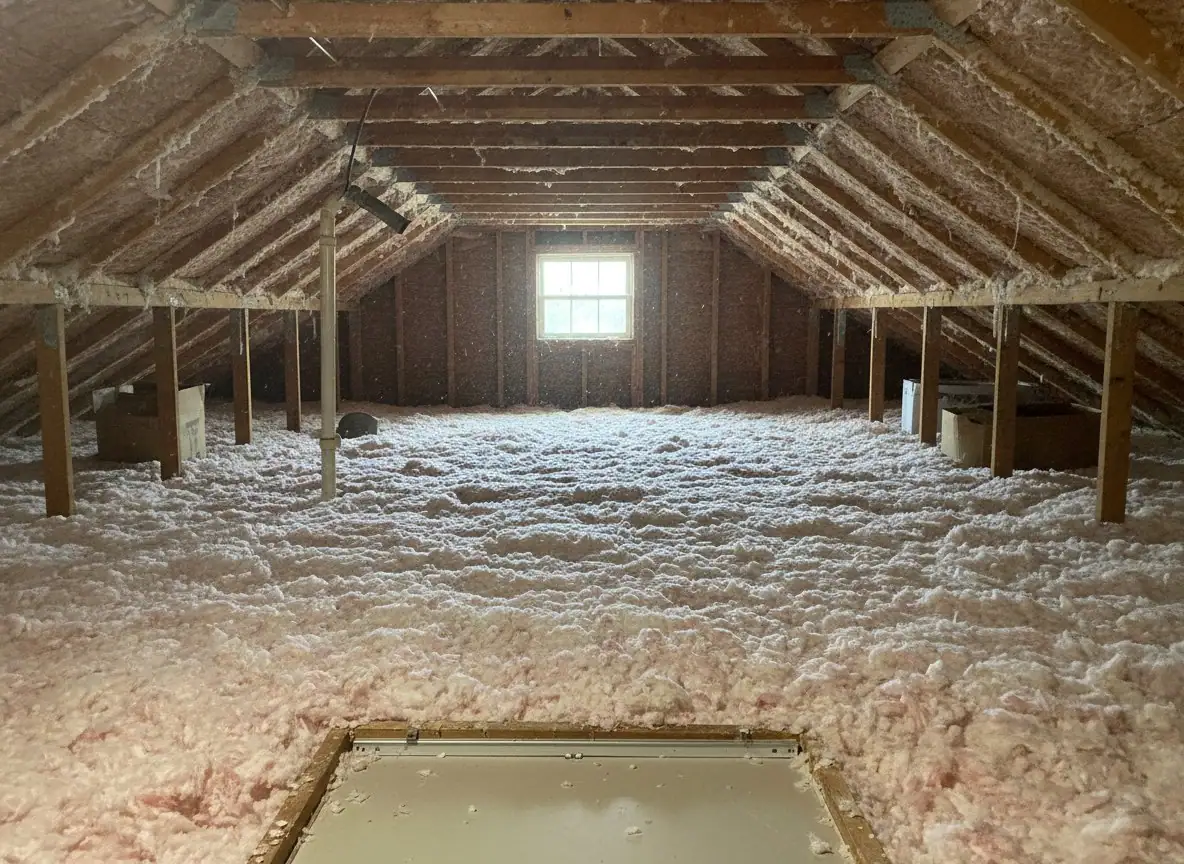
Mineral wool insulation — also commonly called rock wool or stone wool — is produced by melting basalt rock or blast furnace slag at temperatures exceeding 2,900°F, then spinning the molten material into fine fibers. These fibers are then compressed into batts, boards, or loose-fill material used to insulate walls, attics, floors, and crawl spaces. The result is a dense, resilient insulation product with a host of performance advantages over standard fiberglass or cellulose alternatives.
The use of mineral wool in construction dates back to the late 19th century, when early industrial applications demonstrated its exceptional heat resistance. By the mid-20th century, mineral wool had become a staple of European construction, particularly in Scandinavian countries where thermal efficiency and fire safety regulations pushed building science forward. In the United States, mineral wool gained renewed popularity in the early 2000s as energy codes became stricter and homeowners grew more aware of indoor air quality and building durability.
Read moreShow less
Today, mineral wool insulation is recognized by the International Building Code and meets California’s Title 24 energy efficiency standards — a key requirement for any insulation project in Rolling Hills Estates. Its R-value per inch ranges from approximately R-3.0 to R-3.3 for batt products and up to R-4.2 for higher-density board products, making it competitive with and often superior to fiberglass batts in real-world applications.
What truly distinguishes mineral wool from other insulation types is its multi-performance profile:
- Fire resistance: Mineral wool does not ignite and can withstand temperatures up to 2,150°F, providing critical fire safety for wildfire-adjacent communities like Rolling Hills Estates.
- Moisture resistance: The fibers are hydrophobic, meaning they naturally repel water rather than absorbing it — crucial along the marine-influenced Palos Verdes coastline.
- Acoustic performance: Mineral wool’s density makes it an outstanding sound absorber, reducing noise transmission between rooms and floors in multi-story estate homes.
- Dimensional stability: Unlike fiberglass batts that can sag or compress over time, mineral wool maintains its thickness and R-value for the life of the building.
For the custom-built estates, ranch-style homes, and hillside residences that characterize Rolling Hills Estates, mineral wool insulation represents the highest standard of building performance available today. Learn more about our full mineral wool insulation services
Why Mineral Wool Insulation Is Needed in Rolling Hills Estates, CA
The Marine Layer and Coastal Moisture Challenge
Rolling Hills Estates experiences persistent marine layer influence from the Pacific Ocean, particularly between May and September — a weather pattern known locally as “June Gloom” that extends well into summer. Onshore flow pushes cool, saturated air up the Palos Verdes slopes, where it contacts the warmer hillside environment and releases moisture into building assemblies. Relative humidity in Rolling Hills Estates frequently reaches 85–95% during overnight and early morning hours, even when daytime temperatures are mild. Insulation products that absorb moisture — particularly open-cell spray foam in certain applications, or standard fiberglass batts without proper vapor control — can become saturated over time, losing R-value and promoting mold growth inside wall cavities. Mineral wool’s hydrophobic fiber structure actively resists moisture uptake, maintaining performance integrity across all seasons.
Wildfire Exposure on the Palos Verdes Peninsula
The California Department of Forestry and Fire Protection (CAL FIRE) designates Rolling Hills Estates within a Very High Fire Hazard Severity Zone (VHFHSZ). The hillside vegetation, including coastal sage scrub, chaparral, and ornamental landscaping, creates fuel loads that have contributed to significant fire events across the South Bay. The 2009 Station Fire and recurring brush fires throughout the Palos Verdes hills underscore the real fire risk facing local homeowners. Mineral wool’s non-combustible composition — it does not burn, melt, or emit toxic fumes — makes it a responsible and increasingly recommended choice for homes in fire-prone areas. When a fire event occurs, mineral wool insulation in walls, attics, and crawl spaces can significantly slow the spread of flames through building cavities.
Hillside Temperature Differentials and Energy Load
Elevations across Rolling Hills Estates vary dramatically — from neighborhoods near Crenshaw Boulevard at approximately 300 feet to ridgeline properties approaching 1,100 feet. This elevation gradient means that homes at higher elevations experience temperature conditions that differ substantially from lower areas of the South Bay. Ridgeline homes may see nighttime temperatures 8–12°F cooler than coastal lowlands on the same evening, while afternoon sun exposure on south and west-facing slopes can push surface temperatures to 140°F or higher on unshaded roof decks. This thermal stress requires insulation that performs reliably across a wide temperature range without degrading. Mineral wool maintains its R-value from below-freezing temperatures to sustained high heat — a critical attribute for Palos Verdes hillside construction.
Expansive Soils and Crawl Space Vulnerability
The Palos Verdes Peninsula is underlain in many areas by Altamira Shale and Portuguese Tuff geologic formations, soils and substrates that are prone to expansion and movement under moisture loading. This ground movement creates gaps and settlement in crawl space structures, foundation walls, and subfloor assemblies — opening pathways for moisture, cold air, and pests to enter under-floor insulation systems. Rolling Hills Estates also sits within a geologically active landslide zone; the Portuguese Bend Landslide, located just south in Rancho Palos Verdes, has been actively moving for decades. Ground movement in adjacent neighborhoods accelerates the degradation of older fiberglass batt insulation in crawl spaces. Mineral wool’s resilience and dimensional stability make it a superior replacement material in these challenging under-floor environments.
Free, no-obligation estimates
Talk to High Return Insulation
Tell us what you need and we’ll take it from there.
Signs You Need Mineral Wool Insulation in Rolling Hills Estates
Energy Performance Indicators
- Monthly electricity or gas bills that are consistently higher than comparable homes in Rolling Hills Estates or neighboring Palos Verdes Estates
- HVAC system running continuously to maintain set temperatures during moderate coastal weather
- Rooms on upper floors or south-facing exposures that are noticeably warmer than the rest of the home in summer
- Cold floors in winter, particularly in rooms above crawl spaces or unheated garages
Moisture and Air Quality Indicators
- Visible condensation on interior wall surfaces or window sills during morning marine layer hours
- Musty odors in attic spaces or crawl areas, particularly after coastal fog events
- Visible mold or mildew staining on drywall, subfloor sheathing, or insulation facings
- Sagging or discolored insulation visible in attic or crawl space access panels
Acoustic and Comfort Indicators
- Excessive traffic or wind noise penetrating exterior walls — Rolling Hills Estates homes near Crenshaw Boulevard or Hawthorne Boulevard are particularly susceptible
- Sound transmission between floors or rooms that is noticeable and disruptive
- Drafts felt near electrical outlets, switch plates, or recessed lighting fixtures on exterior walls
Urgency Indicators
- Existing insulation is fiberglass and over 20 years old — performance degradation is likely
- Home has recently experienced water intrusion or a roof leak over insulated spaces
- Planning a remodel that opens wall cavities — the ideal time to upgrade to mineral wool
Our process
Our Mineral Wool Insulation Installation Process in Rolling Hills Estates
At High Return Insulation, we follow a structured, thorough process to ensure every mineral wool installation in Rolling Hills Estates meets the highest standards of performance and craftsmanship. Here is what you can expect from start to finish:
- 01
Free Home Assessment and Energy Audit (Day 1 — 1 to 2 Hours)
Our technician visits your Rolling Hills Estates property to conduct a comprehensive inspection of existing insulation, air sealing conditions, and building envelope performance. We use thermal imaging cameras to identify cold spots, air leaks, and moisture in
- 02
Detailed Proposal and Material Selection (Days 2–3)
Based on the assessment, we prepare a written proposal outlining recommended mineral wool product specifications, R-value targets aligned with California Title 24 requirements, and installation locations. We specify the appropriate mineral wool product — batt,
- 03
Site Preparation and Insulation Removal if Needed (Day of Installation — 2 to 4 Hours)
If existing degraded insulation is present, our team removes it safely using HEPA-equipped vacuum systems. In crawl spaces beneath Rolling Hills Estates homes, we address any moisture or debris accumulation before installing new material. Learn about our insul
- 04
Air Sealing (Day of Installation — 1 to 3 Hours)
Before mineral wool installation, we seal all identified air penetrations using code-approved caulk, spray foam, and fire-rated sealants at top plates, electrical penetrations, and framing gaps. This step is critical for hillside homes where wind-driven air in
- 05
Mineral Wool Installation (Day of Installation — 4 to 8 Hours Depending on Scope)
Our installers cut and fit mineral wool batts or boards precisely to each framing bay, ensuring full cavity coverage without compression or voids. In attic applications, we maintain required ventilation clearances at eaves — particularly important in Rolling H
- 06
Quality Inspection and Documentation (End of Installation Day)
We conduct a final walkthrough with the homeowner, documenting installed R-values, material lot numbers, and coverage areas. We provide a written completion report suitable for permit files or future home sale disclosures.
- 07
Post-Installation Follow-Up (30 Days After Installation)
We contact you to confirm satisfaction and answer any questions about performance observations as you experience the installation through different weather conditions on the Palos Verdes Peninsula.
Mineral Wool Insulation Methods and Approaches
Batt Installation (Most Common for Wall and Attic Applications)
Mineral wool batts are pre-cut panels installed between wall studs, floor joists, and attic rafters. Available in standard widths for 2×4 and 2×6 framing, they are the most widely used method for new construction and remodel projects in Rolling Hills Estates. Batts are ideal for accessible wall cavities opened during renovation — a common scenario in the many 1960s and 1970s ranch-style homes throughout the city that are undergoing updates.
Rigid Board Installation (Best for Continuous Insulation and Crawl Spaces)
Mineral wool rigid boards are used to provide continuous insulation layers on exterior walls, under roof decks, and on crawl space walls. In Rolling Hills Estates homes with post-and-beam construction or pier foundations — architectural styles suited to hillside sites — rigid mineral wool boards installed on crawl space walls provide both thermal control and fire resistance. Learn more about crawl space insulation options
Loose-Fill Mineral Wool (For Attic Floors and Irregular Spaces)
Blown-in mineral wool fiber fills irregular attic floor spaces, around existing framing obstructions, and into areas where batt installation is impractical. This method is particularly useful in Rolling Hills Estates homes with complex attic geometries created by multi-gabled rooflines. Explore our blow-in insulation services
Combination Approach (For Maximum Performance in High-Demand Applications)
For Rolling Hills Estates homes seeking the highest level of thermal and acoustic performance — particularly large estate homes along Palos Verdes Drive North or Portuguese Bend Road — we combine mineral wool batts in stud cavities with rigid mineral wool board on the continuous exterior layer, eliminating thermal bridging through framing members entirely.
Mineral Wool Insulation Cost in Rolling Hills Estates, CA
Understanding the investment required for mineral wool insulation in Rolling Hills Estates helps homeowners plan and budget effectively. Costs vary based on project scope, application type, and site-specific conditions. Below are representative price ranges based on current South Bay market conditions.
Typical Cost Ranges
- Attic insulation (mineral wool batts or blown-in): $1.50–$3.50 per square foot installed, with a typical Rolling Hills Estates attic ranging from $1,800 to $5,500 depending on access difficulty and existing insulation removal needs
- Wall cavity mineral wool batts (during remodel): $2.00–$4.00 per square foot installed
- Crawl space mineral wool (batts and rigid board): $3.00–$6.00 per square foot installed, reflecting the added complexity of hillside crawl space access common in Rolling Hills Estates
- Full whole-home mineral wool upgrade: $8,000–$25,000 for larger estate properties, depending on square footage and scope
Read moreShow less
Factors That Affect Cost in Rolling Hills Estates
- Hillside access complexity: Steep lot grades and limited crawl space clearances on Palos Verdes Peninsula properties add labor time and cost compared to flat-terrain locations
- Existing insulation removal: Removal of degraded fiberglass or deteriorated blown-in material adds $0.50–$1.50 per square foot to overall project cost. View our insulation removal pricing details
- Air sealing scope: Older Rolling Hills Estates homes built before 1980 typically require more extensive air sealing, adding $300–$800 to project cost
- California Title 24 compliance requirements: Projects requiring permit documentation and compliance certification may add modest administrative costs
Utility Rebates and Energy Incentives
Southern California Edison and SoCalGas offer rebate programs for qualifying insulation upgrades that meet minimum R-value thresholds. Federal tax credits under the Inflation Reduction Act (IRA) may also apply for mineral wool insulation projects meeting efficiency standards. Contact us at (310) 496-8515 for assistance identifying applicable incentives for your Rolling Hills Estates home.
Rolling Hills Estates Neighborhoods We Serve
Eastfield and Ridgecrest Neighborhoods
Located on the upper eastern slopes of the Palos Verdes Peninsula, Eastfield and Ridgecrest neighborhoods feature larger custom homes built primarily in the 1960s and 1970s. Many of these properties have original fiberglass batt insulation that has compressed significantly over five decades, delivering far below its rated R-value. Hillside orientation exposes these homes to strong Santa Ana wind events, making air sealing combined with mineral wool installation particularly impactful.
Homes Near Crenshaw Boulevard and Hawthorne Boulevard Corridors
Ranch-style and traditional homes along the Rolling Hills Estates corridors adjacent to Crenshaw and Hawthorne Boulevards represent a mix of 1950s through 1980s construction. These properties often have minimal wall insulation and are exposed to traffic noise — an area where mineral wool’s acoustic performance delivers immediate quality-of-life improvements alongside energy savings.
Equestrian-Area Estate Homes (Palos Verdes Drive North Corridor)
Rolling Hills Estates is one of the few South Bay communities with dedicated equestrian zoning and horse trails. Larger estate properties along the Palos Verdes Drive North corridor often include expansive square footage with complex rooflines, multiple HVAC zones, and aging insulation systems that benefit significantly from comprehensive mineral wool upgrades. Learn about attic insulation for large estate homes
Mineral Wool Insulation Maintenance Tips for Rolling Hills Estates Homeowners
- Inspect attic insulation annually: Schedule a visual inspection each fall before the rainy season to confirm mineral wool batts remain properly seated and undisturbed by pests or HVAC service activity.
- Check crawl space conditions after winter rains: Rolling Hills Estates receives most of its annual precipitation between November and March. After significant rain events, inspect crawl spaces for standing water or moisture intrusion that could compromise under-floor insulation.
- Maintain proper attic ventilation clearances: Ensure that soffit and ridge vents remain unobstructed. Hillside homes can accumulate wind-blown debris at eave vents, reducing airflow and creating moisture buildup over mineral wool in attic floors.
- Seal new penetrations promptly: Any new electrical, plumbing, or HVAC penetrations through insulated assemblies should be air-sealed immediately to preserve the building envelope integrity.
- Monitor for pest activity: While mineral wool is less attractive to rodents than fiberglass, inspect for signs of nesting in crawl spaces, where hillside conditions can encourage entry by roof rats common in Palos Verdes Peninsula landscaped areas.
- Recheck insulation after seismic events: Given the active geology of the Palos Verdes Peninsula, significant ground movement can shift crawl space framing and dislodge insulation. Inspect after any earthquake above 4.0 magnitude felt locally.
- Verify HVAC duct sealing integrity: Leaky ducts running through insulated attics or crawl spaces undermine insulation performance. Have ducts tested and sealed as part of any comprehensive insulation service.
Why Choose High Return Insulation for Mineral Wool Insulation in Rolling Hills Estates
High Return Insulation is a dedicated insulation contractor serving Rolling Hills Estates and the broader Palos Verdes Peninsula community. We understand the specific construction styles, microclimatic conditions, and regulatory requirements that apply to homes in this distinctive hillside city — knowledge that general contractors or out-of-area insulation companies simply cannot match.
Our service area covers the full South Bay region, giving us extensive hands-on experience with the coastal moisture patterns, fire hazard zone requirements, and energy code standards that govern insulation work in Rolling Hills Estates. We install mineral wool across all application types — attic, wall, floor, and crawl space — and we offer a full suite of complementary services including insulation removal, spray foam insulation, crawl space encapsulation, and blow-in insulation.
Read moreShow less
We provide honest, transparent pricing, detailed written proposals, and a project process designed to minimize disruption to your household. Every installation is completed by trained, experienced technicians — not subcontracted crews. Call us at (310) 496-8515 to experience the High Return Insulation difference.
FAQ
Frequently Asked Questions About Mineral Wool Insulation in Rolling Hills Estates, CA
How much does mineral wool insulation cost in Rolling Hills Estates?
Costs in Rolling Hills Estates typically range from $1.50 to $6.00 per square foot installed, depending on the application (attic, wall, or crawl space), whether existing insulation removal is needed, and the complexity of hillside site access. A full attic upgrade typically runs $1,800–$5,500, while whole-home projects for larger estate properties can range from $8,000 to $25,000. Contact us at (310) 496-8515 for a free, site-specific estimate.
Is mineral wool better than fiberglass for homes in Rolling Hills Estates?
For most Rolling Hills Estates applications, yes. Mineral wool outperforms fiberglass in moisture resistance — critical given the Palos Verdes Peninsula’s marine layer humidity — fire resistance (important in the Very High Fire Hazard Severity Zone designation), acoustic performance, and long-term dimensional stability. Fiberglass can sag, compress, and absorb moisture over time in coastal environments; mineral wool maintains its rated R-value for the life of the building.
How long does mineral wool insulation installation take?
Most residential projects in Rolling Hills Estates are completed within one to two days. A standard attic insulation upgrade typically takes four to six hours. Larger estate homes with attic, wall, and crawl space work combined may require two full days. We work to minimize disruption to your household throughout the process.
Does mineral wool insulation qualify for California Title 24 compliance?
Yes. Mineral wool insulation products from leading manufacturers meet California’s Title 24 energy efficiency requirements when installed to the specified R-value and coverage area. We document all installations to support permit compliance and can provide certifications for your permit file upon request.
Can mineral wool be installed in older Rolling Hills Estates homes without opening walls?
In existing homes where wall cavities are not being opened for remodel, we can improve thermal performance significantly through attic floor and crawl space mineral wool installation without touching wall assemblies. For wall cavity upgrades without demolition, blown-in cellulose or dense-pack options may be appropriate — we assess each home individually and recommend the best approach. Learn about blow-in insulation alternatives
Is mineral wool insulation safe for my family?
Yes. Modern mineral wool products have been classified as non-carcinogenic by the International Agency for Research on Cancer (IARC) and are compliant with California Proposition 65 requirements. Mineral wool does not contain formaldehyde binders found in some fiberglass products and does not off-gas volatile organic compounds (VOCs), making it an excellent choice for healthy indoor environments.
Does High Return Insulation serve areas near Rolling Hills Estates?
Yes. In addition to Rolling Hills Estates, we serve San Pedro, Harbor City, Long Beach, Carson, Compton, El Segundo, Gardena, Hawthorne, Hermosa Beach, Inglewood, Lawndale, Lomita, Manhattan Beach, Palos Verdes Estates, Rancho Palos Verdes, Redondo Beach, Rolling Hills, Torrance, and West Carson. View our complete service area
What is the R-value of mineral wool insulation, and what R-value do I need in Rolling Hills Estates?
Mineral wool batts achieve R-3.0 to R-3.3 per inch, with higher-density products reaching R-4.2 per inch. California Title 24 requirements for Rolling Hills Estates — located in Climate Zone 9 — typically specify R-38 for attic floors, R-13 to R-21 for walls, and R-19 for floors over crawl spaces. We assess your home’s specific climate zone placement and existing conditions to recommend the optimal R-value for maximum energy return on investment.
Get a Free Mineral Wool Insulation Estimate in Rolling Hills Estates Today
If you are ready to experience the performance difference that mineral wool insulation delivers in your Rolling Hills Estates home — improved energy efficiency, enhanced fire safety, superior moisture resistance, and outstanding acoustic comfort — High Return Insulation is ready to help. Our team is familiar with every neighborhood, construction era, and hillside challenge that defines this exceptional Palos Verdes Peninsula community.
Do not let outdated or inadequate insulation drive up your energy bills or leave your home vulnerable to coastal moisture and wildfire risk. Call us today at (310) 496-8515 to schedule your free, no-obligation home assessment. You can also reach us online through our contact page to request an appointment at your convenience. Schedule your free Rolling Hills Estates insulation assessment now
High Return Insulation — delivering high-performance insulation solutions built for Rolling Hills Estates and the entire South Bay.
Get in touch
Find insulation help near you
Request a free estimate online or give us a call — our team will follow up quickly.
- Call us(310) 496-8515
- Visit28441 Highridge Rd, Rolling Hills Estates, CA 90274
- HoursMon-Sun 07:00-19:00